
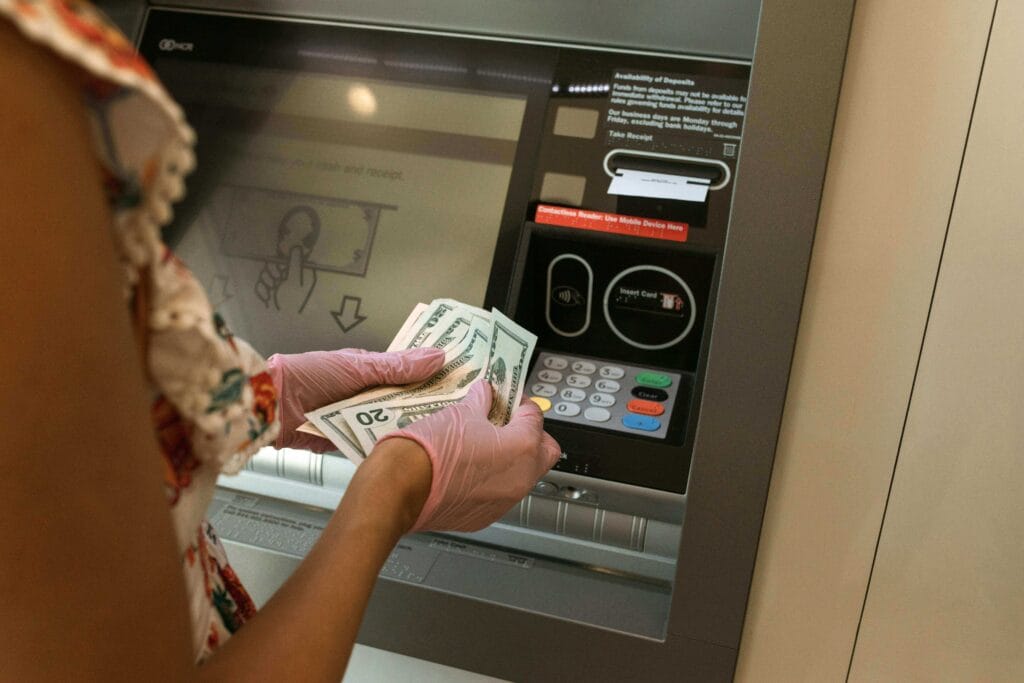
When my car broke down on a Sunday morning sixty miles from home, the tow truck driver told me it was going to cost $340 cash. I didn’t have my debit card with me. I had my credit card, and I’d vaguely heard you could get cash from it at an ATM. So I did.
It felt like a lifesaver in that moment. It was not a lifesaver. That $340 ended up costing me significantly more than I expected — and I didn’t fully understand why until I sat down weeks later and actually read the fine print I’d never bothered to look at before.
If you’ve ever found yourself in a pinch and wondered whether a credit card cash advance is a reasonable option, this post is for you. Let’s break down exactly what a cash advance is, what it actually costs, and when — if ever — it might make sense to use one.
What Is a Credit Card Cash Advance?
A cash advance is when you use your credit card to borrow cash instead of making a purchase. You can do this in a few different ways:
- Withdrawing cash at an ATM using your credit card and PIN
- Going to a bank teller and requesting a cash advance directly
- Using convenience checks that some card issuers mail to cardholders
It sounds simple enough. But here’s the thing: a cash advance is not the same as a regular credit card purchase — not even close. The fees, the interest rate, and the way payments get applied all work differently, and almost always in a way that costs you more.
How Much Does a Cash Advance Actually Cost?
This is where things get eye-opening. A cash advance typically hits you with multiple fees at the same time.
| Fee Type | Typical Amount |
|---|---|
| Cash advance fee (upfront) | 3%–5% of the amount, or $10 minimum |
| Cash advance APR | 24%–30% (higher than purchase APR) |
| ATM fee (if applicable) | $2–$5 per transaction |
| Grace period | None — interest starts immediately |
Let me show you what that looks like in real numbers. Say you take a $500 cash advance on a card with a 29.99% cash advance APR and a 5% advance fee.
- Upfront fee: $25 (5% of $500)
- Daily interest rate: 29.99% ÷ 365 = approximately 0.082% per day
- Interest after 30 days: roughly $12.33
- Total cost for one month: about $37.33 on top of the $500 you borrowed
That’s a 7.5% premium just for the first thirty days. If you carry that balance for three months, you’re paying close to $60 extra — and that’s before factoring in any ATM fees.
According to the Consumer Financial Protection Bureau (CFPB), cash advances are one of the most expensive forms of short-term borrowing available on a credit card. Source: consumerfinance.gov
The Grace Period Problem
With regular credit card purchases, you typically get a grace period — usually 21 to 25 days after your statement closes — during which you can pay off the balance in full and pay zero interest. That’s the deal most people know.
Cash advances have no grace period. None. Interest starts accruing the day you take out the advance, sometimes even the hour. There’s no window where you can sidestep the interest charges by paying quickly. The clock starts immediately.
This is one of the biggest surprises for people who use cash advances for the first time thinking it works the same as a regular purchase.
How Payments Get Applied (And Why It Matters)
Before the CARD Act of 2009, credit card companies were allowed to apply your payment to the lowest-interest portion of your balance first. That meant if you had a regular purchase balance at 20% APR and a cash advance balance at 28% APR, your payment would go toward the purchase balance — and the expensive cash advance kept accumulating interest untouched.
The CARD Act changed this. Payments above the minimum must now go toward the highest-interest balance first. That’s genuinely better for consumers.
But here’s the catch: the minimum payment can still be applied to the lower-interest balance. So if you’re only making minimum payments and you have a mix of purchase debt and a cash advance, the high-interest cash advance can still linger longer than you’d expect.
Paying well above the minimum is the only real protection here.
Cash Advance vs. Regular Purchase vs. Balance Transfer
It helps to see how a cash advance compares to the other ways you might use a credit card.
| Feature | Regular Purchase | Balance Transfer | Cash Advance |
|---|---|---|---|
| Typical APR | 20%–24% | 0%–5% (intro) | 24%–30% |
| Grace period | Yes (21–25 days) | Varies | No |
| Upfront fee | None | 3%–5% | 3%–5% |
| Interest starts | After statement | After intro period | Immediately |
| Credit score impact | Low if managed well | Low if managed well | Can raise utilization |
The pattern is pretty clear. Cash advances sit at the most expensive end of the spectrum across almost every category.
Does a Cash Advance Hurt Your Credit Score?
A cash advance doesn’t directly trigger a hard inquiry or appear as a separate negative item on your credit report. But it can still affect your score indirectly.
When you take a cash advance, that balance gets added to your overall credit card balance — which means it raises your credit utilization ratio. If your utilization climbs above 30%, your credit score can take a hit. If it climbs above 50% or higher, the impact can be significant.
For example, if your credit card has a $2,000 limit and you take a $600 cash advance, your utilization on that card jumps to 30% before you’ve made any other purchases. Add in regular spending and you could be pushing 50% or higher by your statement closing date.
According to FICO, credit utilization accounts for 30% of your credit score — making it one of the most sensitive factors to sudden changes. Source: myfico.com
If you’re actively working on building or maintaining your score, a large cash advance can be a setback that takes a few months to recover from, even after the balance is paid off. For a deeper look at how utilization affects your score and what you can do to manage it, [What Is Credit Utilization and How Does It Affect Your Credit Score?] covers the mechanics in full detail.
What About the Cash Advance Limit?
Your cash advance limit is almost always lower than your overall credit limit. Most issuers set the cash advance limit at 20%–30% of your total credit line.
So if you have a $5,000 credit limit, you might only be able to take $1,000 to $1,500 in cash advances — not the full amount. You’ll usually find your specific cash advance limit printed on your statement or in your online account.
When Does a Cash Advance Ever Make Sense?
Honestly? Rarely. But there are a handful of situations where it might be the least-bad option.
Genuine emergencies with no alternatives. If you’re in a situation where you need cash immediately — medical payment at a facility that doesn’t accept cards, emergency travel, or a scenario with no ATM access to your checking account — and you have no other source of funds, a cash advance might be the only option available.
When the fee is cheaper than the alternative penalty. If avoiding a cash advance means a bounced check fee ($35), a utility shutoff reconnection fee ($75), or a late rent fee ($150), the math might occasionally favor the advance — provided you pay it off immediately.
If you can pay it off within days. Interest accrues daily, but if you can clear the balance in two or three days, the total cost is much lower than carrying it for weeks. Still not free, but more manageable.
That said, in most non-emergency situations, better alternatives exist.
Better Alternatives to a Cash Advance
Before reaching for the cash advance option, consider these:
| Alternative | How It Works | Cost |
|---|---|---|
| Debit card / checking account | Use your own cash | Free |
| Personal loan | Fixed payments, lower APR | 8%–20% APR typical |
| Paycheck advance apps | Borrow against upcoming paycheck | Low or no fee |
| Friends/family loan | Informal borrowing | Usually free |
| Emergency fund | Pre-saved cash | Free |
| Credit union loan | Short-term small-dollar loans | Lower rates than cards |
If you’re finding yourself in situations where cash advances feel necessary regularly, that’s often a sign that building a small emergency fund — even just $500 to $1,000 — would make a meaningful difference. Even a basic savings account sitting idle beats the cost of repeated cash advances.
For more on managing credit card balances without falling into expensive traps, [How to Use a Credit Card Without Going Into Debt] walks through the habits and systems that keep costs down over the long term.
How to Read Your Cash Advance Terms Before You Need Them
Here’s a suggestion: look up your cash advance terms right now, before you’re ever in an emergency. You’ll want to know:
- Your cash advance APR (usually listed in your Schumer Box — the standardized fee disclosure table on your card agreement)
- Your cash advance limit
- The upfront fee percentage
- Whether you have a PIN set up for ATM access
Most people don’t think about this until they’re already at an ATM at 9pm trying to figure out why their card isn’t working. Setting your PIN and knowing your terms in advance takes five minutes and could save you both money and real stress when you least need it.
How a Cash Advance Appears on Your Statement
When you review your credit card statement after taking a cash advance, you’ll typically see it listed separately from your regular purchases — labeled as “Cash Advance” with the date, amount, and location. The associated fee usually appears as a separate line item on the same statement.
Your statement will also show the different APRs applied to different portions of your balance. It’s worth taking a few minutes to read through that section carefully — most people skip it entirely, which is part of why cash advance costs catch them off guard.
If a cash advance balance starts to pile up alongside regular spending, getting intentional about paying it down fast matters more than people realize. Tackling multiple balances strategically — prioritizing the highest-interest debt first — is the most effective way to limit the total damage and keep interest from compounding further.
The Bottom Line
A cash advance is a feature, not a benefit. Credit card issuers make it available because it’s profitable for them — not because it’s a good deal for you.
The immediate fee, the higher APR, the zero grace period, and the potential credit score impact add up fast. For most situations, other options are cheaper and smarter.
That said, financial emergencies are real. Life doesn’t always give you time to plan. If a cash advance is what stands between you and a genuinely bad outcome, use it — but pay it off as fast as you possibly can and treat it as a one-time emergency measure, not a habit.
And going forward, the best move you can make is knowing your terms now — before you ever need to use that feature.
For a broader look at how credit card interest works across the board, [How Does Credit Card Interest Work? Here’s What Your Card Company Isn’t Telling You] breaks down APR, daily rates, and the minimum payment trap in full detail.
Soo Kim is the founder of Smart Credit Journey, a personal finance blog dedicated to helping everyday Americans navigate the U.S. credit system with confidence. This content is for informational purposes only and does not constitute financial or legal advice.