
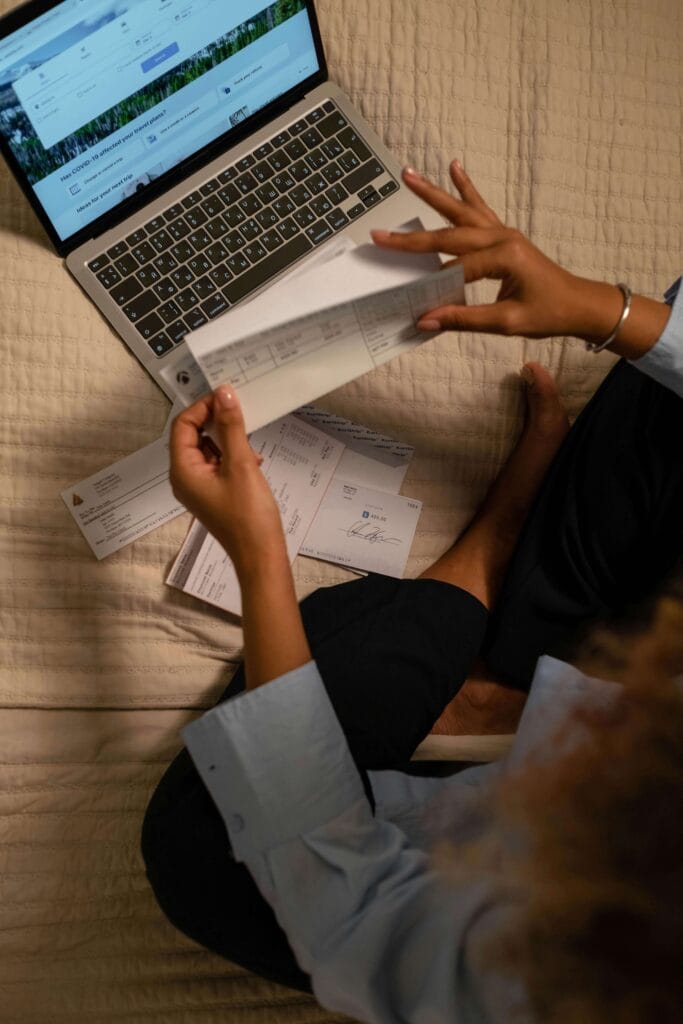
I didn’t think I’d have to fight for $94.
It was a charge from a subscription I’d canceled three months earlier. I had the confirmation email. I had the screenshots. I had the date I canceled, timestamped and everything. And yet, there it was on my statement — $94, bold as anything, like it had every right to be there.
I called the company first. That went nowhere. The customer service rep was polite but useless, and after twenty minutes on hold, I was told a “ticket had been submitted” and someone would follow up. Reader, no one followed up.
That’s when I learned what a credit card dispute actually is — and how to use it properly. Because here’s what most people don’t realize: when you pay with a credit card and something goes wrong, you have a legal right to challenge that charge. It’s not a favor the card company does for you. It’s the law.
Let me walk you through exactly how to do it.
What Is a Credit Card Dispute?
A credit card dispute — sometimes called a chargeback — is a formal process where you ask your card issuer to reverse a charge on your account. This is different from simply asking a merchant for a refund. When you file a dispute, the card issuer steps in and investigates on your behalf.
The process is protected under the Fair Credit Billing Act (FCBA), a federal law that gives consumers the right to challenge billing errors on open-end credit accounts — which includes credit cards. Under the FCBA, you can dispute charges for:
- Items you were billed for but never received
- Charges for the wrong amount
- Duplicate charges
- Fraudulent or unauthorized charges
- Services or products that were not as described
What the FCBA does not cover: disputes over quality alone (for example, you received the item but you just don’t like it), or disputes for debit card purchases — those fall under different rules.
The FCBA Timeline: This Part Matters More Than You Think
Here’s the piece that trips people up. The FCBA has a strict deadline.
You must dispute a billing error in writing within 60 days of the date the statement containing the error was mailed to you.
Not 60 days from when you noticed. Not 60 days from the charge date. Sixty days from the statement date. If you miss this window, you lose your FCBA protections.
This is exactly why I tell people to check their statement every single month — not just their balance, but the actual line items. I used to skim. Now I read every entry.
Step-by-Step: How to Dispute a Credit Card Charge
Step 1: Try the Merchant First (But Keep It Brief)
Before you go to your card issuer, make a reasonable attempt to resolve the issue with the merchant. This isn’t just etiquette — most card issuers expect it. Keep the interaction short. One call or email is enough. If you get a “no,” a non-response, or a runaround, move on.
Document everything. Screenshot the conversation. Save emails. Note the date, time, and name of whoever you spoke with. You’ll need this later.
Step 2: Locate the Dispute Process for Your Card
Every major card issuer has a dispute process. Most are accessible online or through the app — and that’s the fastest way to initiate one.
| Card Issuer | How to Dispute | Notes |
|---|---|---|
| Chase | App or website: “Dispute a charge” | Usually resolved in 5–7 business days |
| American Express | Online via “Account Services” | Known for fast provisional credits |
| Capital One | App: Select the charge → “Dispute charge” | Online process is straightforward |
| Citi | Online or phone: 1-800-950-5114 | Can dispute online or via secure message |
| Discover | App or website | Often issues provisional credit quickly |
| Bank of America | Online Banking → Accounts → Activity | Phone option also available |
If you can’t find it online, call the number on the back of your card and say: “I need to dispute a charge on my account.”
Step 3: Gather Your Evidence
Before you submit, collect everything you have:
- Your statement showing the charge
- Any receipts, order confirmations, or email records
- Cancellation confirmation (if applicable)
- Screenshots of conversations with the merchant
- Photos of damaged or incorrect items (if relevant)
- Any prior written communication with the merchant
You don’t always need to submit all of this upfront — the card issuer will usually ask you what happened and may request documentation afterward. But having it ready speeds things up significantly.
Step 4: File Your Dispute
When you file, you’ll typically be asked to:
- Select the charge in question
- Choose a dispute reason from a list (unauthorized charge, item not received, duplicate charge, etc.)
- Provide a brief description of what happened
- Upload supporting documentation (optional at this stage, but helpful)
Be factual and clear. Don’t write an essay — stick to the timeline of events. Card issuers review hundreds of disputes; a concise, organized explanation works in your favor.
Important: Under the FCBA, a written dispute provides the strongest legal protection. If you’re disputing by phone, follow it up with a written letter sent to the billing inquiries address (not the payment address) via certified mail. Keep a copy.
The CFPB provides a sample dispute letter template at consumerfinance.gov/consumer-tools/credit-cards/.
Step 5: Provisional Credit and the Investigation Period
Once you file, most card issuers will issue a provisional (temporary) credit to your account while the investigation is ongoing. This is standard practice for most major issuers, though it’s not legally required by the FCBA.
The FCBA gives card issuers up to two billing cycles (but no more than 90 days) to investigate and resolve the dispute. During this time:
- You are not required to pay the disputed amount
- The issuer cannot report the disputed amount as delinquent
- Interest cannot be charged on the disputed amount
If the dispute is resolved in your favor, the provisional credit becomes permanent. If it’s resolved against you, the credit is reversed — and you’ll owe the amount plus any accumulated interest.
What Happens During the Investigation?
Your card issuer will contact the merchant and request documentation. The merchant has an opportunity to respond and provide their own evidence (for example, proof of delivery, signed receipt, or proof that a cancellation wasn’t processed in time).
This is why your documentation matters. The card issuer is essentially arbitrating between your account of events and the merchant’s. The more organized and specific your evidence, the better.
If the merchant doesn’t respond within the required timeframe, the dispute is typically resolved in your favor automatically.
Dispute Outcomes: What the Results Look Like
| Outcome | What Happens Next |
|---|---|
| Resolved in your favor | Provisional credit becomes permanent; charge is removed |
| Resolved against you | Provisional credit reversed; you owe the original amount |
| Merchant doesn’t respond | Usually resolved in your favor |
| Partial resolution | A portion of the charge may be refunded |
If the dispute is resolved against you and you disagree, you have the right to appeal. You can request an explanation and submit additional documentation. If you believe the process was handled incorrectly, you can file a complaint with the Consumer Financial Protection Bureau (CFPB) at consumerfinance.gov/complaint or call 1-855-411-2372.
Common Dispute Reasons — and What to Expect
Not all disputes are treated equally. Here’s a quick breakdown of the most common scenarios:
| Dispute Type | Typical Resolution Time | Approval Likelihood |
|---|---|---|
| Unauthorized / fraudulent charge | 3–5 business days (often faster) | Very high |
| Item not received | 7–15 business days | High (with tracking evidence) |
| Duplicate charge | 5–10 business days | High |
| Subscription after cancellation | 10–30 business days | High (with cancellation proof) |
| Item not as described | 10–45 business days | Moderate |
| Service quality dispute | 10–45 business days | Varies widely |
Fraudulent charges are typically resolved the fastest, especially if you’ve already flagged the card for fraud. Subscription disputes — like my $94 situation — tend to go well when you have cancellation confirmation.
What a Credit Card Dispute Is NOT
This is important, because misusing the dispute process has real consequences.
A credit card dispute is not a way to get out of charges you legitimately agreed to pay. Filing a dispute you know isn’t valid — sometimes called “friendly fraud” or “chargeback abuse” — is a violation of your cardholder agreement and can result in:
- Your dispute being denied
- Your account being flagged or closed
- In serious cases, legal action from the merchant
If you received a product and just didn’t like it, or if you changed your mind about a purchase, that’s a return — not a dispute. Contact the merchant through their normal return process.
How This Affects Your Credit Score
Good news here: filing a credit card dispute does not directly affect your credit score. The dispute process is between you and your card issuer — it doesn’t get reported to the credit bureaus.
However, a few indirect considerations:
- If the disputed charge causes your balance to appear higher than it actually is, your utilization ratio could be temporarily affected — which can influence your score
- Once the dispute is resolved and the provisional credit is made permanent, your balance (and utilization) will reflect the correct amount
For more on how your balance and utilization interact, [What Is Credit Utilization and How Does It Affect Your Credit Score?] is worth reading before your next billing cycle closes.
The Difference Between a Dispute and a Refund
These two things are easy to confuse, but they work very differently.
| Refund | Dispute | |
|---|---|---|
| Initiated by | You → Merchant | You → Card Issuer |
| Timeline | 3–10 business days (varies by merchant) | Up to 90 days |
| Legal protection | None | FCBA protects you |
| Who decides | Merchant | Card Issuer |
| When to use | Merchant is cooperative | Merchant unresponsive or uncooperative |
Always try the refund route first. Disputes take longer and require more documentation. But when the merchant won’t cooperate, the dispute process exists specifically for that situation — and it works.
If you’re not sure how long a normal refund should take, [How Long Does a Credit Card Refund Take — And What to Do If It’s Late] covers that in detail.
My $94 — What Actually Happened
I filed the dispute online in about eight minutes. I uploaded my cancellation confirmation and a screenshot of the charge. The card issuer issued a provisional credit to my account the next day.
Eleven days later, I got an email: the dispute was resolved in my favor. The credit was permanent. The merchant never responded.
That’s not always how it goes — sometimes it takes longer, sometimes merchants push back. But the process worked the way it’s supposed to. I just had to actually use it.
If you’re sitting on a charge right now that doesn’t look right, don’t wait. The 60-day clock under the FCBA is already running. Check your statement date, gather your documentation, and file.
And if you’ve been dealing with errors on your credit report — not just charges, but account-level inaccuracies — [How to Dispute Credit Report Errors Step by Step (And Actually Win)] walks through that separate process in full.
Soo Kim is the founder of Smart Credit Journey, a personal finance blog dedicated to helping everyday Americans navigate the U.S. credit system with confidence. This content is for informational purposes only and does not constitute financial or legal advice.